
Google told CMOs through its Think with Google account on Nov. 19 that “AI didn’t make your brand invisible in Search. Your content did.”
The post pairs “Stop the ‘Top 10’ listicle” with “start leading with first-hand expertise.” That first half drew questions from SEOs on X about whether Google is telling brands to drop listicles. The October article the post links to is more specific. Its example is a generic “Top 10 Things to Consider” post, the same kind of post Google Search’s own AI guide cites as commodity content.
The article appeared Oct. 14 on Think with Google, the company’s digital marketing publication. Written by Brendon Kraham, Google’s VP, Search & Commerce Global Ads Solutions, it encourages brands to create specific content that draws on their own expertise and to measure their plans by leads or sales.
What Kraham’s Article Asks Brands To Do
Kraham structures the article around three top priorities that he has heard from CMOs, which cover the “super-empowered consumer,” establishing the brand as an authority in its area of expertise, and creating measurable business results.
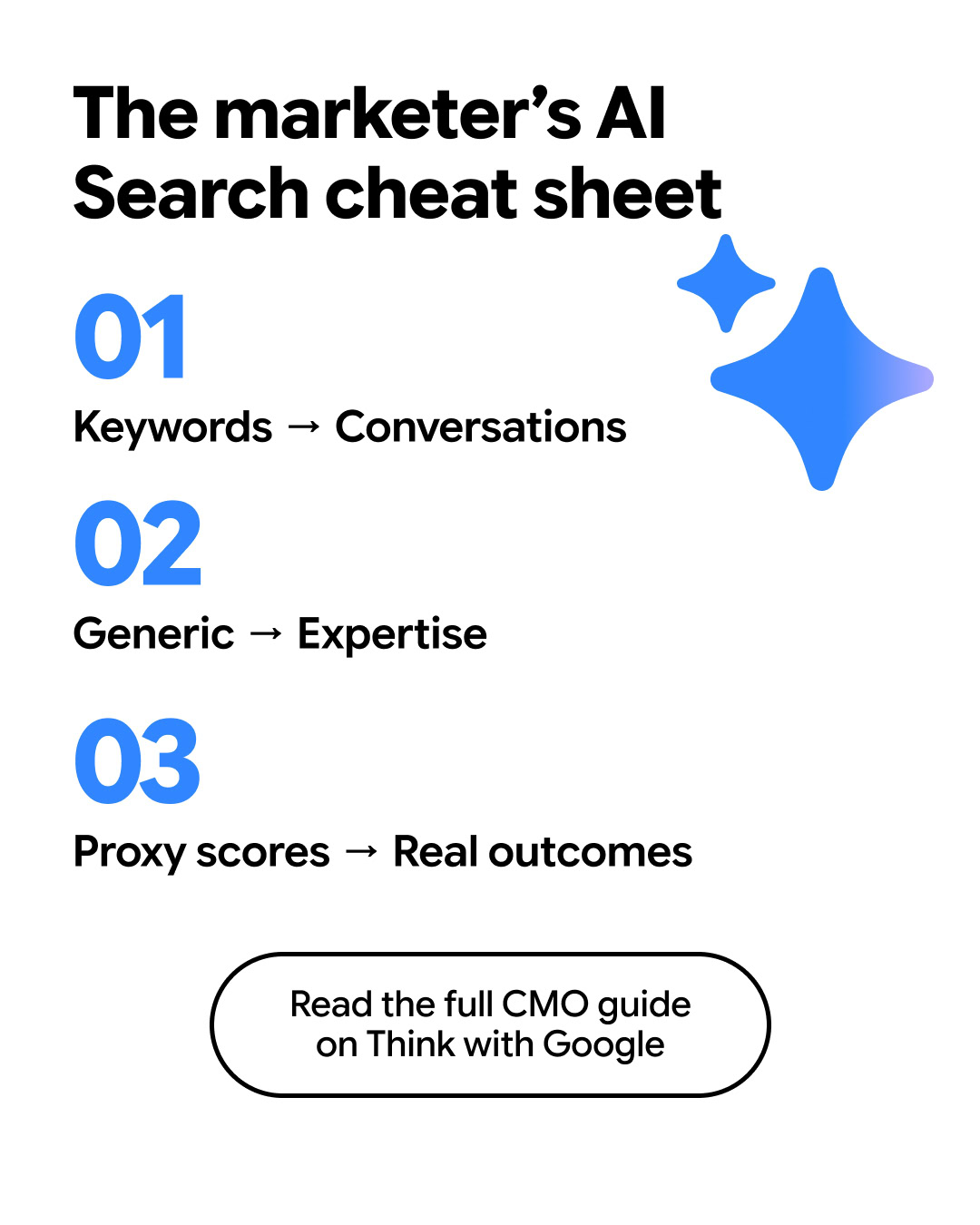
Think with Google summarized its advice to CMOs in this three-point cheat sheet.
The “Top 10” reference is found in his section on developing expertise, where he writes:
Take a running store, for example. Instead of publishing a generic “Top 10 Things to Consider,” they could create a deep-dive video analyzing exactly why a specific customer’s running shoes collapsed. That isn’t a generic review anyone could have written. It’s highly specific, real-world advice.
On measurement, he tells CMOs to keep planning “based on real business goals like leads or sales, not unproven proxy metrics.”
How SEOs Are Reading The Post
Lily Ray, who founded Algorythmic and specializes in SEO and AI search strategy, referenced the post on X and exclaimed, “Wow did Google really just tell CMOs to stop with the top 10 listicles?”
Ray is no stranger to tracking self-promotional “best” listicles, where a company lists itself as #1. In a June column for Search Engine Journal, she also reported that many of Google’s AI Overview results cited such listicles along with recommendations for other companies.
Growth advisor Eli Schwartz posted his version of the three steps “without being sanitized by the PR team.” Next to “Stop trusting proxy scores,” his post reads, “AEO VISIBILITY IS NOT REAL.”
Ross Hudgens, founder and CEO of Siege Media, replied to Ray, “Not of the type you’re thinking of. :)”
Google Search’s Guide Uses The Same Kind Of Example
Google Search’s guide to optimizing for generative AI features, published in May, draws the same line as Kraham’s article. It gives “7 Tips for First-Time Homebuyers” as an example of commodity content, which it says is “often based on common knowledge.” The guide contrasts it with a first-hand piece about waiving a home inspection.
Neither the article nor the guide mentions self-promotional “best” lists.
Why This Matters
When this content from Google reaches a CMO, the article it links to provides the recommendations in detail; it also has the same criteria for evaluating planned tips posts as does Google Search’s guide. Go through each of these individually, first asking if each represents something you have learned firsthand or simply restates common knowledge.
For self-promotional “best” lists, look to Ray’s tracking data instead.
Looking Ahead
Google shares major updates to its Search documentation on the documentation updates page, which also offers an RSS feed. Following the feed is an easy way to keep up with changes as they’re posted.
Featured Image: Remo_Designer/Shutterstock
